
Guide · Flooring & Interior Fit-out
Renovate or replace parquet: derive the right measure from existing conditions
Scratches, dull traffic areas or one damaged board do not automatically mean replacing the entire parquet floor. A reliable decision follows construction, finish, stability, cause of damage and room junctions, in that order.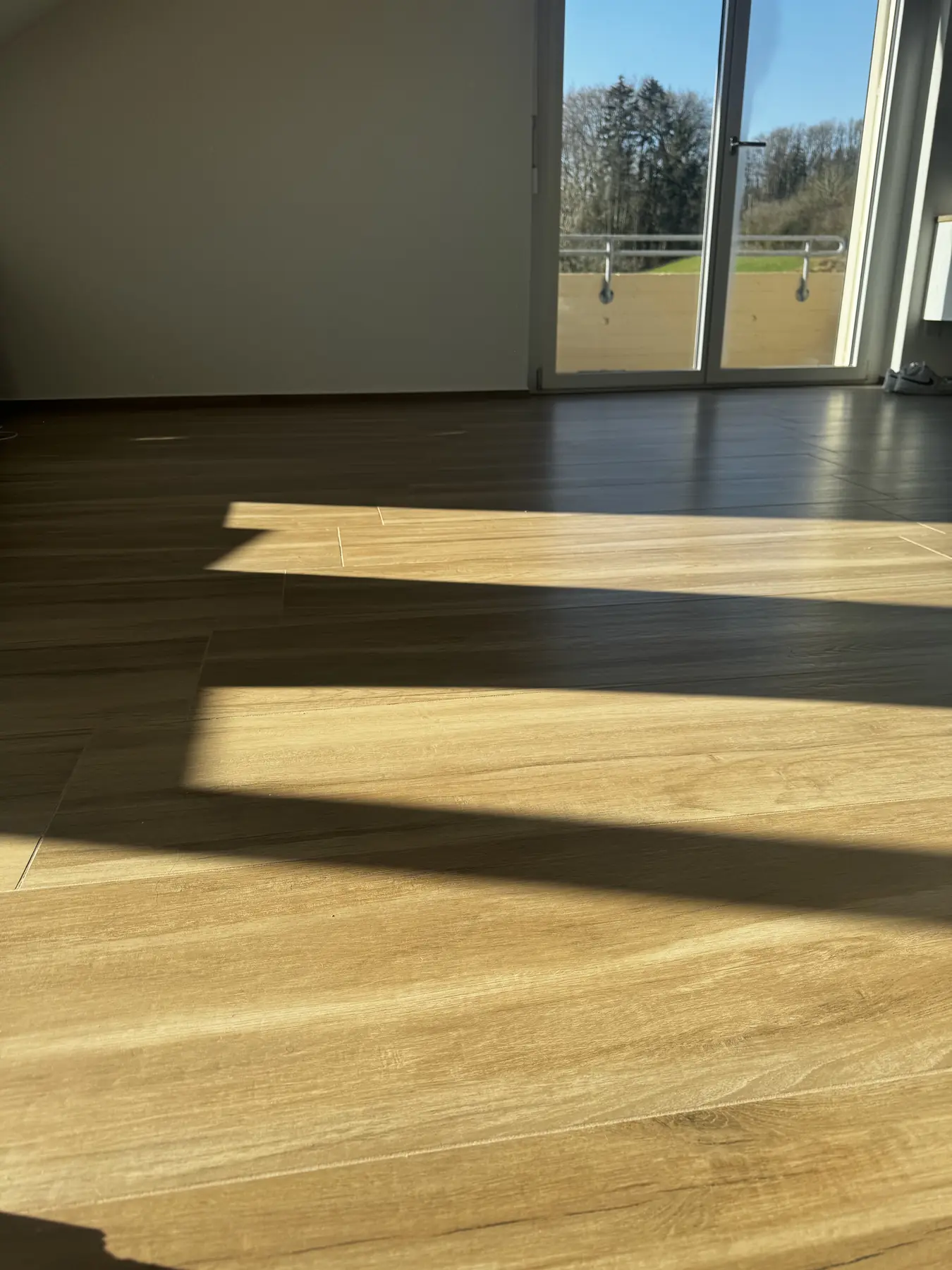
Four measures, but one appropriate sequence
‘Renovate or replace?’ is too broad a question. Professional care, local repairs and full-surface refurbishment lie between those extremes. The appropriate level can be judged only once the existing floor is clearly identified. A visual inspection alone is rarely enough.
First establish whether the floor is actually parquet, how the elements are constructed and installed, and what finish is present. Next determine the cause of visible damage. Only then compare effort, expected appearance and intervention depth. This avoids care merely concealing damage or premature removal of a floor that could be retained.
Four decision areas
- Care
- For dirty, dull or lightly worn finishes, provided the product and treatment are known and the construction is stable.
- Repair locally
- For limited damage where elements, connections and finish allow professional partial repair.
- Refurbish the whole surface
- For widespread wear if the wear layer, installation and finish support the planned treatment.
- Replace
- If construction or connections are unsuitable, damage is too widespread, or causes can be resolved reliably only by rebuilding.
Identify construction, installation and finish first
Solid parquet, engineered parquet and other timber floors respond differently to treatment. Full bonding, floating installation or other fixings also matter. With multilayer products, the actual remaining wear layer is decisive. A generic number of possible sanding cycles would be unreliable; only the specific product and condition allow assessment.
The finish is also part of the survey. A sealed floor is cleaned and refurbished differently from a naturally oiled one. Manufacturer guidance and product records help avoid unsuitable cleaners or incompatible coatings. If information is missing, agree an inconspicuous trial area before treating the whole room.
- Gather product, format, age and available documents
- Check installation method and accessible edges
- Record finish as sealed, oiled or not yet identified
- Do not guess wear-layer thickness or earlier treatment from appearance
- Include skirtings, doors, thresholds and fitted furniture in the survey
Separate the damage from its cause
A scratch initially affects the surface. An open joint, loose element, bulge or dark stain may instead indicate movement, moisture or construction damage. These symptoms require different checks. With moisture in particular, identify and resolve the cause first; a new finish must not conceal an unresolved leak or persistent damp.
Survey each room in relation to windows, doors, kitchen, bathroom, heated areas and heavy traffic routes. Overview and detail photos, plan markings and a timeline make quotations more comparable. Unexplained stains or deformation may require professional moisture and substrate assessment.
When care or local repair may make sense
On stable floors with superficial dirt or dull wear, matched cleaning and care may suffice. Finish type and suitable care system must be known. Aggressive cleaners or arbitrary oils can change appearance and complicate later work. Document product approval, dosage and a trial area in writing.
Local repairs are worth considering where damage is clearly limited and the rest merits retention. The Swiss parquet association distinguishes, among other things, site-finished surfaces from factory-finished elements. Specialists may replace individual pieces depending on the system, but initial colour, texture or sheen differences are possible. Do not promise an invisible repair.
Fully bonded parquet often permits targeted work on individual elements. Floating glued tongue-and-groove systems may be substantially more complex because element connections are involved. Spare material of identical size and a matching finish improves planning, but does not guarantee a perfect visual match.
Sand the whole floor only after technical approval
Full-surface treatment can unify widespread scratches, dull traffic areas and old finishes. It is not the standard answer for every floor. Assess wear layer, flatness, stability, previous sanding, edges and desired finish before quoting. Sanding may substantially change factory-textured or specially treated products.
Agree the intended appearance too. Wood changes colour with age, light and use. Treated areas may look different from before or from neighbouring untreated rooms. A trial area demonstrates colour, sheen and feel better than a small sample, but does not replace approval of the full treatment system.
In occupied rooms, coordinate dust protection, access, furniture, drying and closure times and protection of adjacent components. The Swiss parquet association provides specific guidance on protecting and covering renovated timber floors. Later trades must not load the new surface before system approval permits it.
When replacement is more appropriate than further repair
Consider replacement when damage is extensive, elements or connections no longer remain stable, construction is unsuitable for future use, or causes can be resolved reliably only by opening the floor. New layout, underfloor heating, height or transition requirements may also influence rebuilding. This is more than a design choice.
Before removal, bring substrate, moisture, flatness, levels and junctions into one plan. Doors, skirtings, kitchen units, fitted furniture and stair connections may limit available height. Choose new parquet as part of the whole: size, installation, finish and junction details must suit existing conditions.
Five steps to a reliable quotation
- 01Identify the existing floor
Document product, construction, installation, finish, earlier work and junctions.
- 02Map the damage
Record type, extent, progression and possible causes room by room.
- 03Compare preservation levels
Compare care, partial repair, full refurbishment and replacement with their limits.
- 04Approve samples and interfaces
Clarify target appearance, transitions, skirtings, doors, furniture, dust protection and periods without use.
- 05Define acceptance
Jointly record overall appearance, junctions, care instructions, spare material and open points.
What belongs in a comparable parquet quotation
Offers are comparable only if based on the same findings and goal. Include areas and edges, removals, local repairs, sanding and finish system, skirtings, thresholds, doors, protection, furniture logistics and disposal. Unknown substrate or moisture conditions are listed as prior investigations or clearly identified provisional items.
At handover, inspect more than visible areas: edges, junctions, agreed sample appearance and documented care matter too. Label remaining spare material and store it dry. This keeps the work performed and future floor treatment traceable.
- Existing-condition and damage record as the quotation basis
- Clear distinction between care, repair, sanding and replacement
- Specify finish system, trial area and accepted colour differences
- Coordinate furniture, dust protection, access and adjacent work
- Acceptance, care documents and spare material included in handover